
Australian Shepherd
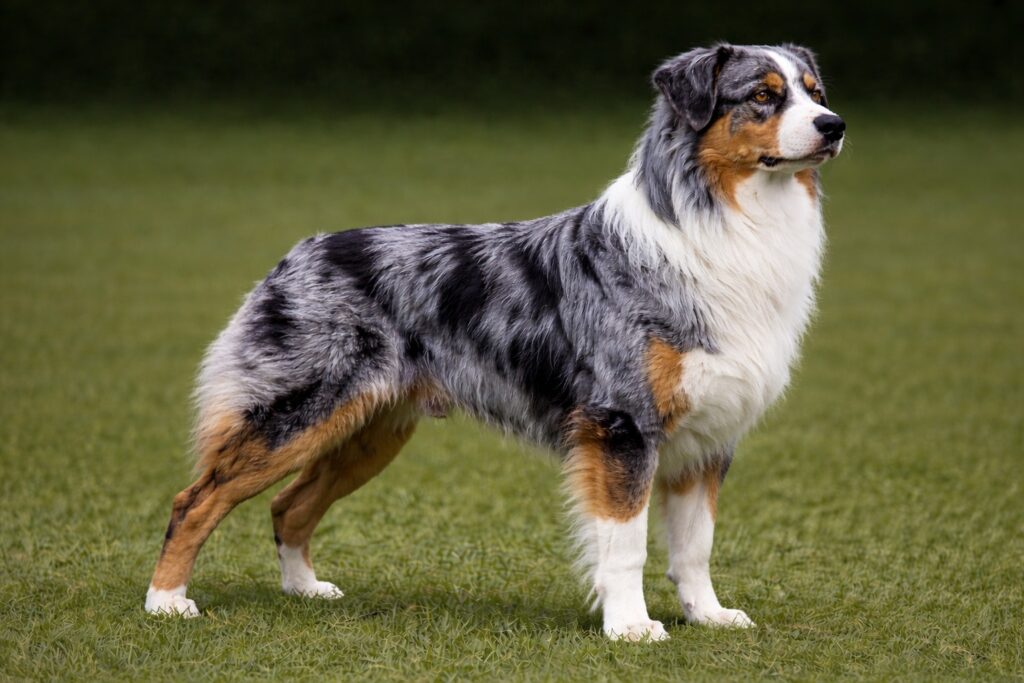
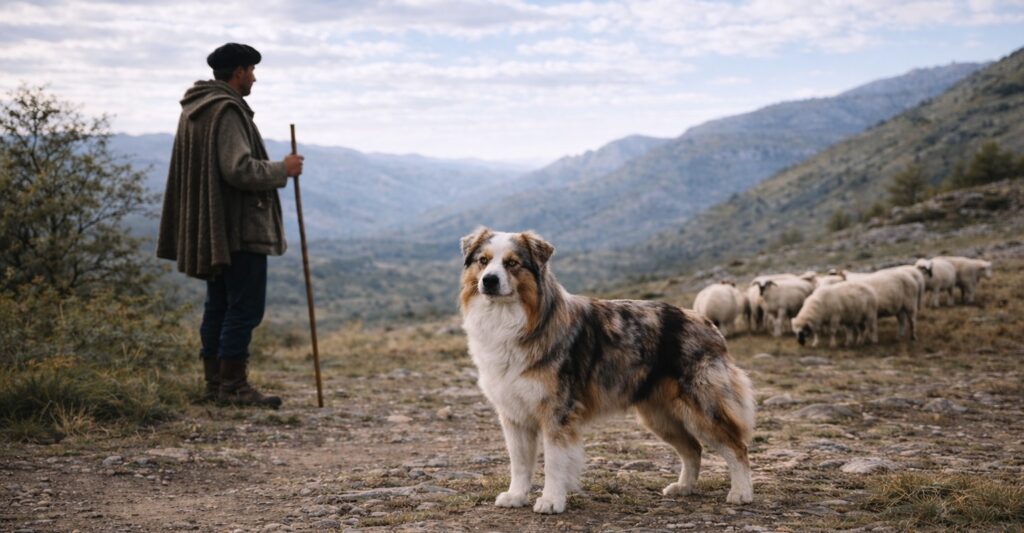
The Australian Shepherd is a highly intelligent herding breed developed in the United States for working livestock on ranches and farms. Its roots trace back to herding dogs brought by Basque shepherds from the Pyrenees region of Spain and Andorra, contributing to the breed’s agility, endurance, and strong working instinct.
Breed Traits
Historical Origin Representation
Breed Overview
Origin & Historical Purpose
The Australian Shepherd developed in the United States during the 19th century as a versatile livestock herding dog used primarily on ranches and farms. Despite its name, the breed’s ancestry traces back to herding dogs brought to North America by Basque shepherds from the Pyrenees region of Spain and Andorra, many of whom arrived via Australia during large sheep importations. American breeders refined these dogs for intelligence, agility, and strong stock-handling ability suited to the demanding conditions of the western United States. The breed was officially recognized by the American Kennel Club in 1993 and by the Canadian Kennel Club in 1993, where it is classified in the Herding Group.
Physical Standard & Breed Characteristics
The Australian Shepherd is a medium-sized, well-balanced, and athletic breed built for agility and endurance. Males typically stand between 20 and 23 inches at the shoulder and weigh approximately 50 to 65 pounds, while females generally measure between 18 and 21 inches and weigh about 40 to 55 pounds. The breed has a moderately long double coat that may be straight or slightly wavy and provides protection in varied weather conditions. Coat colors commonly include blue merle, red merle, black, and red, often with white markings or copper points. The expressive eyes, which may be brown, blue, amber, or a combination, contribute to the breed’s distinctive appearance.
Temperament & Behavioral Profile
The Australian Shepherd is highly intelligent, energetic, and strongly devoted to its family. It thrives when given structured tasks and close interaction with its handler. The breed is naturally alert and responsive, often displaying strong herding instincts that may extend to controlling movement of people or other animals. Early socialization and consistent training help channel the breed’s drive and sensitivity into balanced behavior.
Exercise & Mental Requirements
Exercise requirements are very high. Bred to work livestock for long periods, the Australian Shepherd requires significant daily physical activity and mental stimulation. Activities such as advanced obedience, agility, herding trials, and other performance sports are excellent outlets for its intelligence and energy. Without sufficient engagement, the breed may become restless or develop behavioral problems.
Grooming & Maintenance
Grooming needs are moderate. The medium-length double coat requires regular brushing to remove loose hair and prevent tangling, particularly during seasonal shedding periods. The coat is naturally weather-resistant and should not be heavily clipped. Routine nail trimming, ear cleaning, and dental care support overall maintenance.
Health Overview & Recommended Testing
The Australian Shepherd has an average lifespan of approximately 12 to 15 years. Known health concerns within the breed include hip dysplasia, elbow dysplasia, progressive retinal atrophy, cataracts, and epilepsy. Responsible breeding programs commonly include orthopedic evaluations, ophthalmologic examinations, and genetic testing for hereditary conditions such as the MDR1 gene mutation to help maintain overall breed health.