
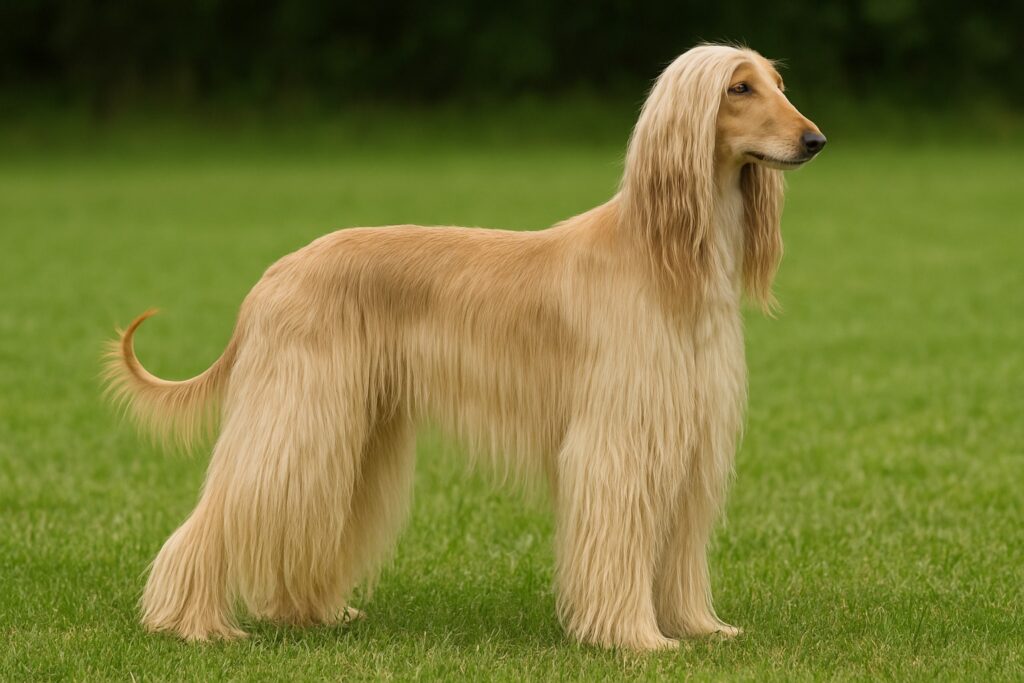
Afghan Hound
The Afghan Hound is an ancient sighthound originating in the mountainous regions of Afghanistan, developed for hunting large game across rugged terrain. Renowned for its flowing coat and dignified presence, it combines athletic speed with independent intelligence.
Breed Traits
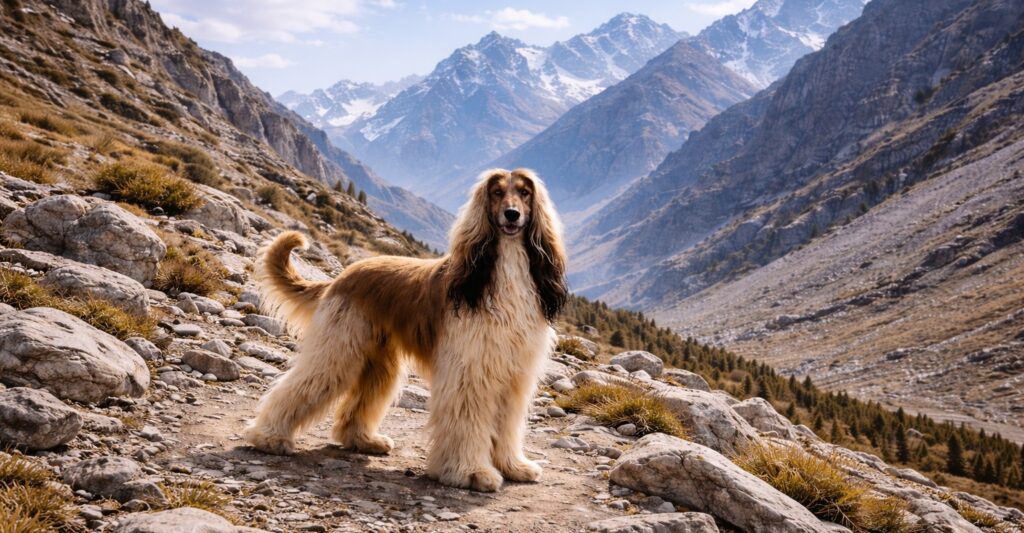
Historical Origin Representation
Breed Overview
Origin & Historical Purpose
The Afghan Hound is an ancient sighthound originating in the mountainous regions of Afghanistan, with documented history dating back several thousand years. The breed was developed to hunt large game such as deer, wild goats, and even snow leopards across harsh terrain, relying on speed, endurance, and exceptional eyesight. Afghan Hounds were brought to the United Kingdom in the early 20th century, where modern breed development was standardized. The breed was officially recognized by the American Kennel Club in 1926 and later by the Canadian Kennel Club in 1937, where it is classified within the Hound Group.
Physical Standard & Breed Characteristics
The Afghan Hound is a tall, elegant, and aristocratic breed known for its distinctive long, flowing coat and refined head structure. Males typically stand between 27 and 29 inches at the shoulder, while females generally measure between 25 and 27 inches. Adult weight commonly ranges from 50 to 60 pounds, depending on sex and overall build. The breed’s coat is long, fine, and silky, covering most of the body while the facial area remains relatively short and smooth. All colors are accepted within the breed standard, including solid, patterned, and brindle variations. The Afghan Hound’s long, narrow head, dark almond-shaped eyes, and high-set tail with a ring at the end are key identifying features.
Temperament & Behavioral Profile
Temperamentally, the Afghan Hound is independent, dignified, and somewhat aloof with strangers. While deeply loyal to its family, the breed is not typically overly demonstrative and may display a reserved nature. Intelligence is present but often expressed through independent thinking rather than eager obedience. Early socialization is important to encourage confidence and balanced behavior, particularly given the breed’s natural sensitivity.
Exercise & Mental Requirements
Exercise requirements are moderate to high. As a true sighthound, the Afghan Hound possesses strong prey drive and benefits from opportunities to run in securely fenced areas. Daily walks are essential, but controlled sprinting sessions help maintain physical condition and mental satisfaction. Because of their instinct to chase moving objects, they should not be trusted off-leash in unsecured environments.
Grooming & Maintenance
Grooming demands are significant. The long, silky coat requires frequent brushing, often several times per week, to prevent tangling and matting. Regular bathing is also necessary to maintain coat texture and cleanliness. Without consistent maintenance, the coat can quickly become unmanageable. Professional grooming is common among owners who prefer to keep the coat in full condition.
Health Overview & Recommended Testing
From a health perspective, the Afghan Hound has an average lifespan of approximately 12 to 14 years. Responsible breeders screen for conditions such as hip dysplasia, hereditary cataracts, thyroid disorders, and certain cardiac issues. Sensitivity to anesthesia is also noted within the breed due to its low body fat percentage, which is typical of sighthounds. Regular veterinary care, appropriate exercise, and proper coat maintenance contribute significantly to overall longevity and wellbeing.