
Alaskan Malamute
The Alaskan Malamute is an ancient Arctic working breed developed in northwestern Alaska to pull heavy loads across long distances in harsh winter conditions. Recognized for its strength, dense double coat, and steady temperament, it combines endurance with loyalty and independence.
Breed Traits
Historical Origin Representation
Breed Overview
Origin & Historical Purpose
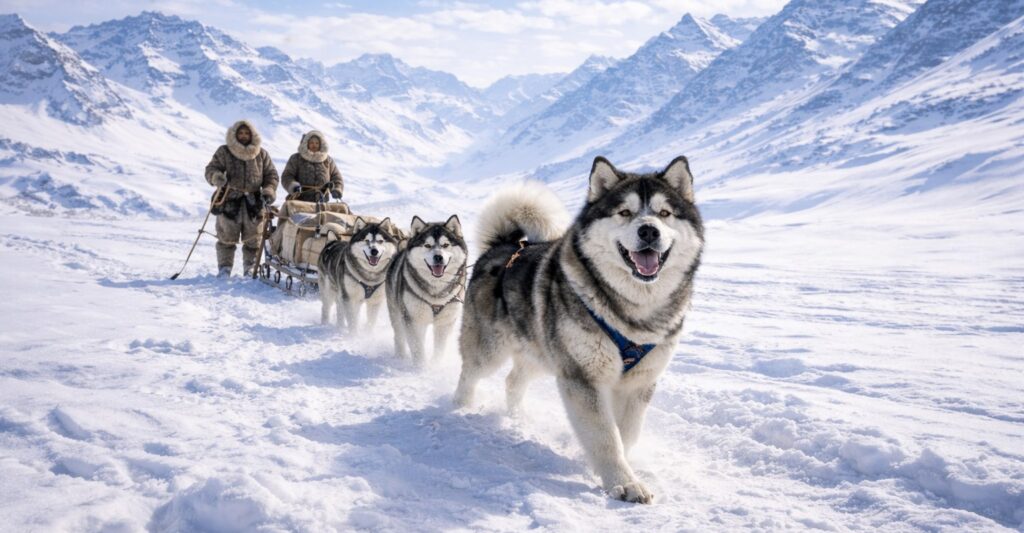
The Alaskan Malamute is one of the oldest Arctic sled dog breeds, developed by the Mahlemut Inuit people of northwestern Alaska to pull heavy loads across long distances in extreme winter conditions. Unlike lighter sled dogs bred for speed, the Malamute was valued for strength, endurance, and reliability in harsh climates. The breed was formally recognized by the American Kennel Club in 1935 and later by the Canadian Kennel Club in 1939, where it is classified in the Working Group.
Physical Standard & Breed Characteristics
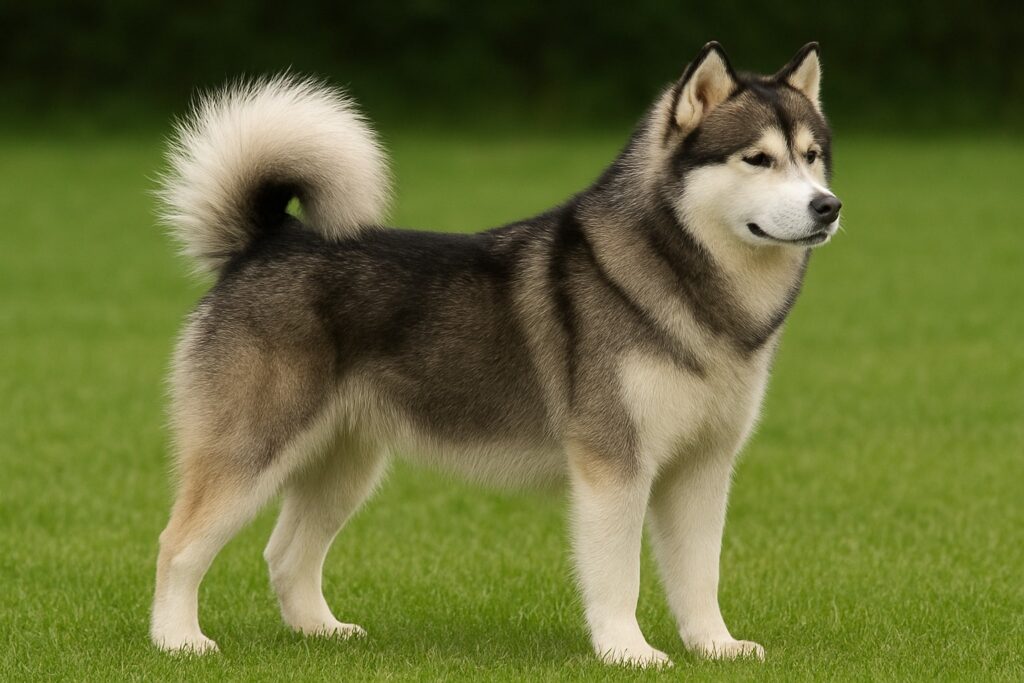
The Alaskan Malamute is a large, powerful, and heavily built northern breed with a deep chest and strong bone structure. Males typically stand around 25 inches at the shoulder and weigh approximately 85 pounds, while females average about 23 inches and 75 pounds, though some individuals may be larger. The breed has a thick double coat consisting of a dense, woolly undercoat and a coarse outer coat designed for insulation in extreme cold. Coat colors range from light gray to black, sable, red, and seal, always combined with white markings. The broad head, almond-shaped brown eyes, erect ears, and plumed tail carried over the back are defining features of the breed.
Temperament & Behavioral Profile
The Alaskan Malamute is affectionate, loyal, and highly social with its family. It is not typically a one-person dog and generally enjoys being part of a group, whether human or canine. While friendly with people, the breed is not naturally a strong guard dog. Independence and strong will are common traits, reflecting its working heritage, and consistent, confident leadership is important. Early socialization helps promote balanced behavior, particularly given the breed’s strength and natural prey drive.
Exercise & Mental Requirements
Exercise needs are high. The Malamute was bred for endurance work and thrives with regular physical activity and purposeful engagement. Long daily walks, structured exercise, and activities such as pulling sports or hiking are ideal outlets. Without sufficient exercise and mental stimulation, the breed may become bored and destructive. Secure fencing is important, as Malamutes may roam or chase small animals.
Grooming & Maintenance
Grooming requirements are significant due to the dense double coat. Regular brushing is necessary to manage shedding and maintain coat health. Seasonal coat blows occur once or twice per year and result in very heavy shedding during those periods. Routine coat maintenance helps reduce matting and maintain skin condition.
Health Overview & Recommended Testing
The Alaskan Malamute has an average lifespan of approximately 10 to 14 years. As a large working breed, hip dysplasia is a known concern, along with inherited eye conditions such as cataracts and progressive retinal atrophy. Polyneuropathy has also been identified within certain lines. Responsible breeding programs commonly include hip evaluations and ophthalmologic testing to help reduce the incidence of hereditary issues.